




Description
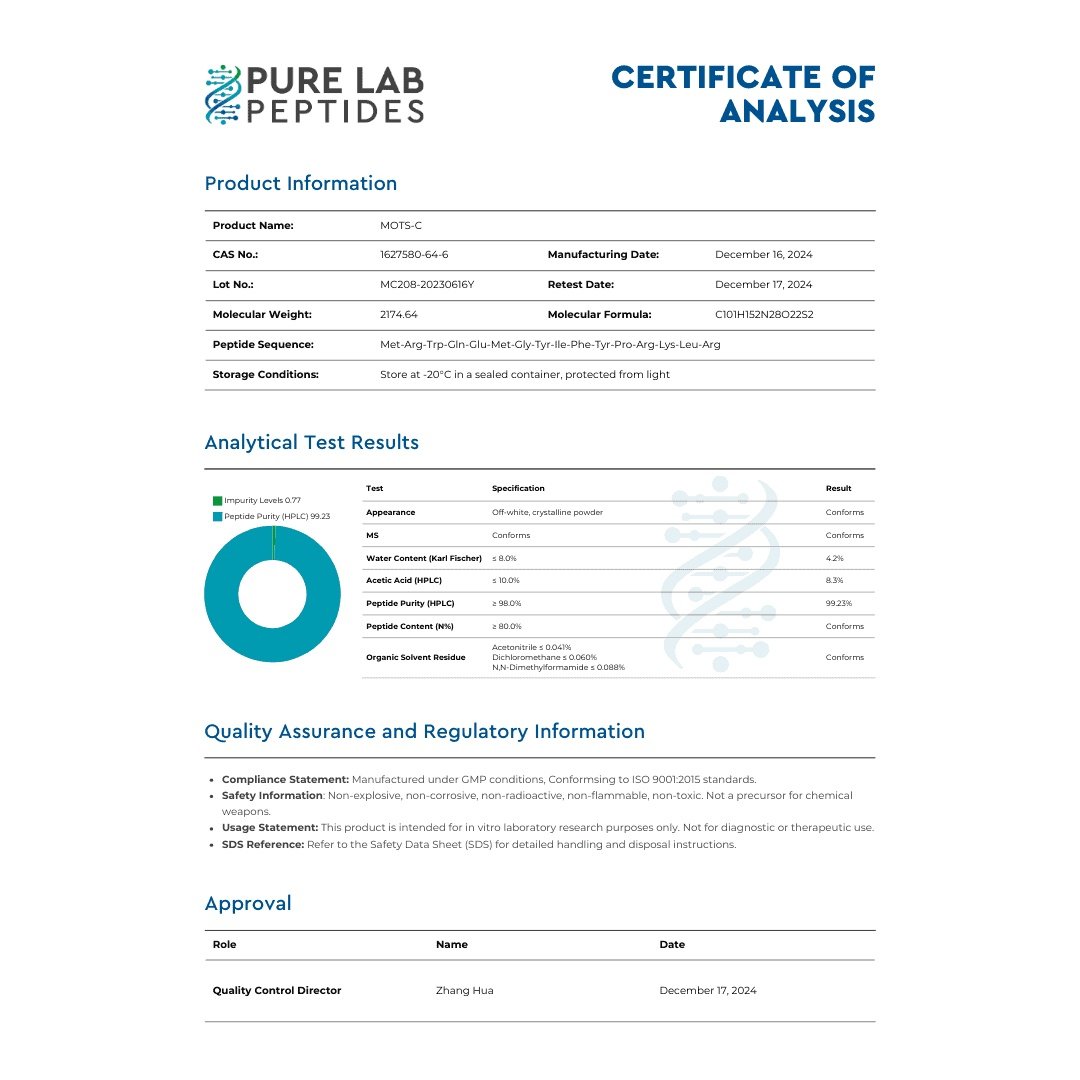
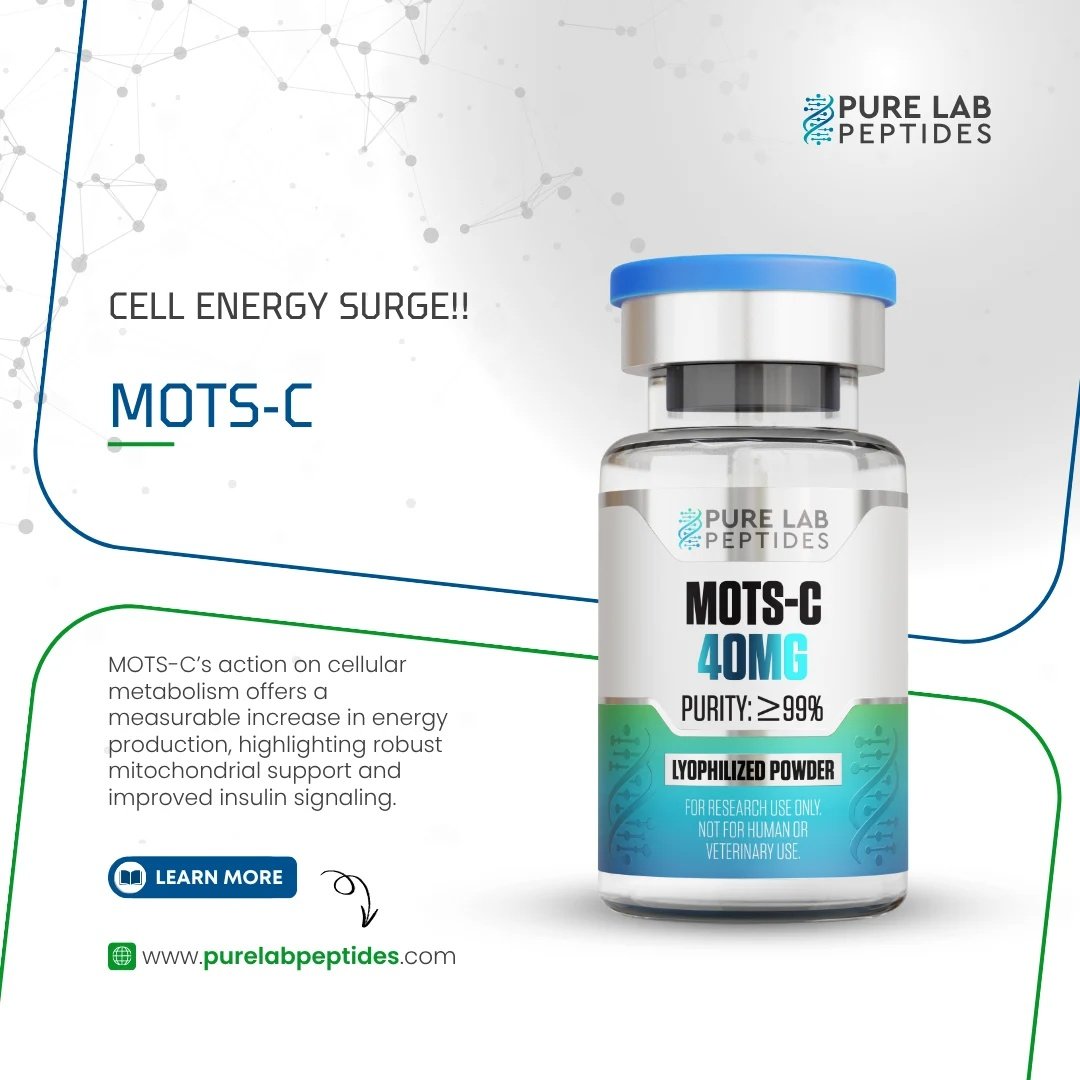
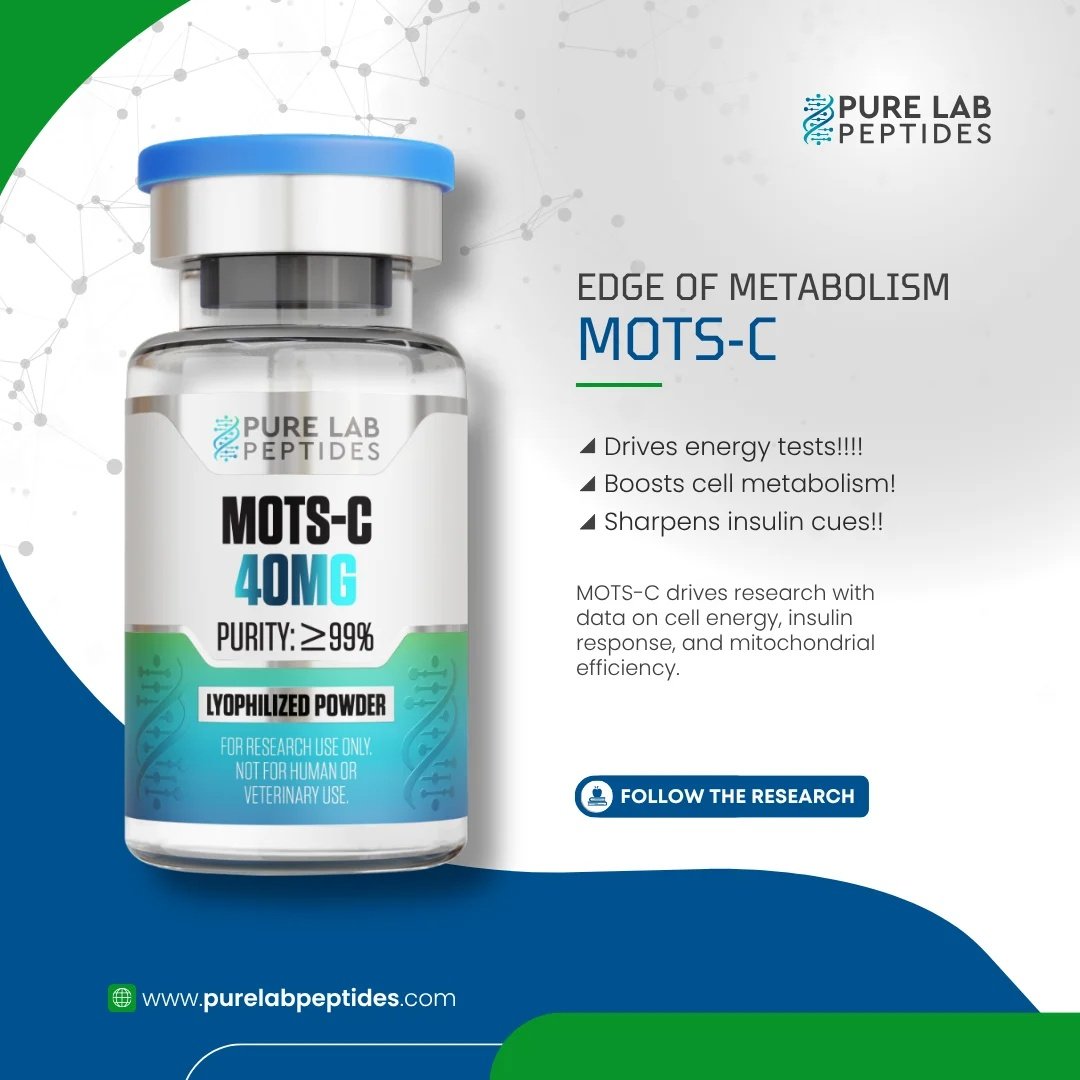
MOTS-c 40mg is a mitochondrial-derived research peptide widely studied for its roles in cellular energy regulation, insulin signaling, and exercise adaptation. Sourced from superior quality raw materials and synthesized using cutting-edge technology, our MOTS-c ensures top-notch purity and efficacy for detailed and rigorous research initiatives.
Key Features:
-
Produced in compliance with the strictest industry standards for purity and consistency.
-
Each batch undergoes stringent quality checks to ensure uniform reliability.
-
Supplied in a lyophilized format to maintain stability and efficacy under recommended storage conditions.
Applications:
-
Investigating effects on AMPK activation and glucose/lipid metabolism.
-
Exploring impacts on skeletal muscle function, exercise response, and endurance.
-
Examining roles in aging-related metabolic decline and insulin resistance models.
Specifications and Documentation
-
Material Safety Data Sheet (MSDS): Coming Soon.
-
Handling and Storage Instructions: Coming Soon.
MOTS-c 40mg is highly regarded in the research sector for its prospective applications in metabolic regulation and exercise physiology, offering researchers a valuable tool for profound exploration of mitochondrial signaling and cellular stress adaptation.